




 Call Us Now


No. Some homes have enough capacity and breaker space for a properly sized charger circuit. Others need repairs, load management, or a panel upgrade before adding a continuous charging load.

Touchstone Electric Blogs
Prepare For A Home EV Charger
Learn how Rock Hill homeowners can plan panel capacity, charger location, permits, and wiring before a Level 2 EV charger installation.
Expert Insight
From licensed electricians
Code Compliant
Built to safety standards
Licensed & Insured
NC & SC certified
5-Star Reviews
Trusted by homeowners
Planning First
A Level 2 Charger Needs A Real Load Check
Before a Rock Hill homeowner installs a Level 2 EV charger, the first question is not where the charger looks best. It is whether the panel, service, grounding, breaker space, and wiring path can support the load safely. Touchstone Electric checks those pieces before recommending a charger location or circuit plan. For the service overview, see our EV charging station installation page.
- Panel capacity and available breaker space reviewed before installation
- Garage, driveway, or exterior charger location planned around daily parking
- Dedicated 240-volt circuit sized for the charger and manufacturer instructions
- Permits, inspection path, and future charger needs considered before work starts
A charger that runs for hours is different from a tool or appliance that cycles briefly. That steady draw is why planning matters.
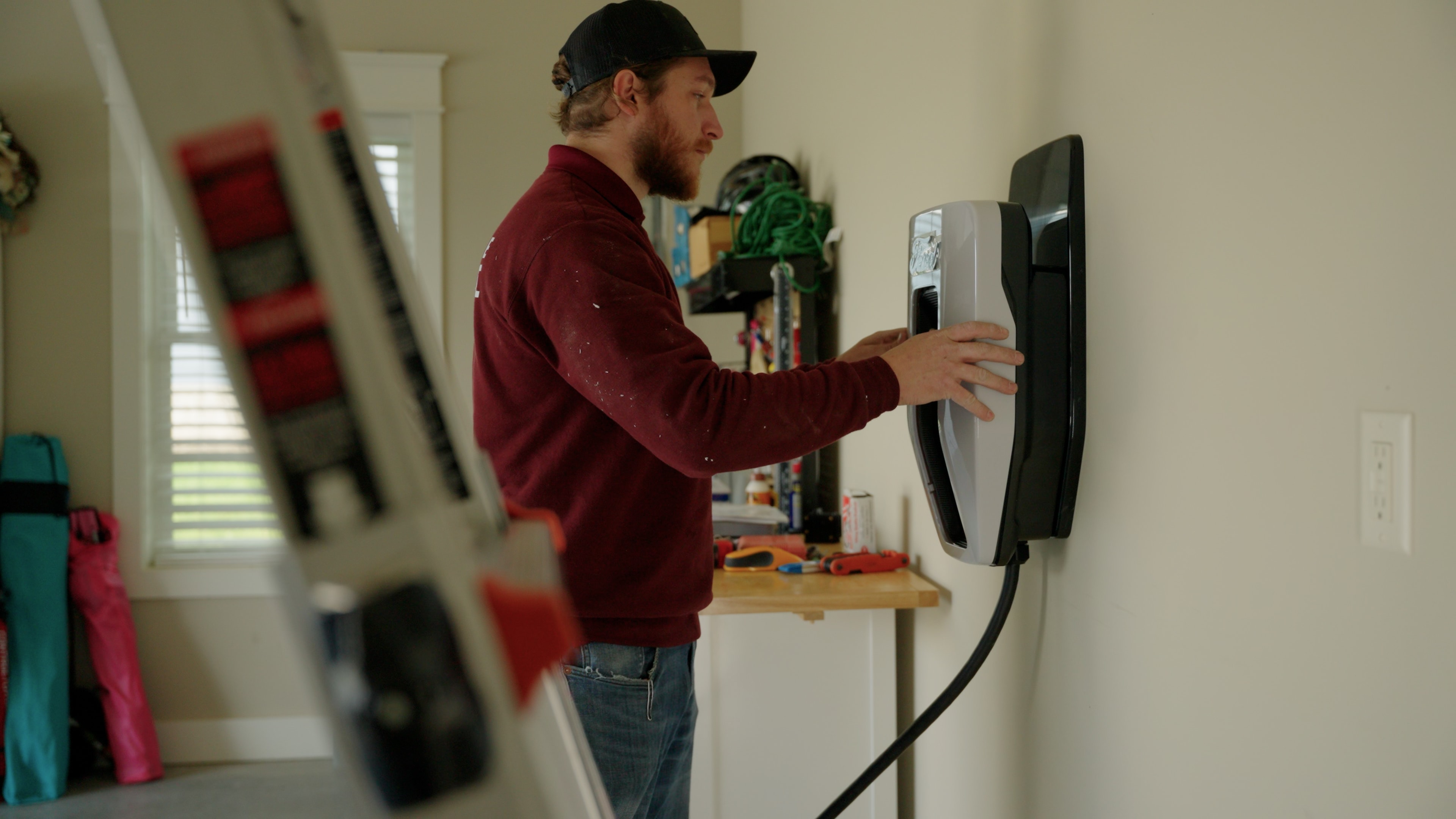
EV charging is a continuous load
A Level 2 charger can pull power for three hours or more. That makes it a continuous load, which means the wiring and breaker need extra margin instead of being sized right at the charger setting. That margin protects the circuit from steady heat.
Charger amperage matched to your panel capacity
Dedicated circuit planned for continuous charging load
Surge protection and future charging needs discussed
What We Plan
Safe Charging Starts At The Panel
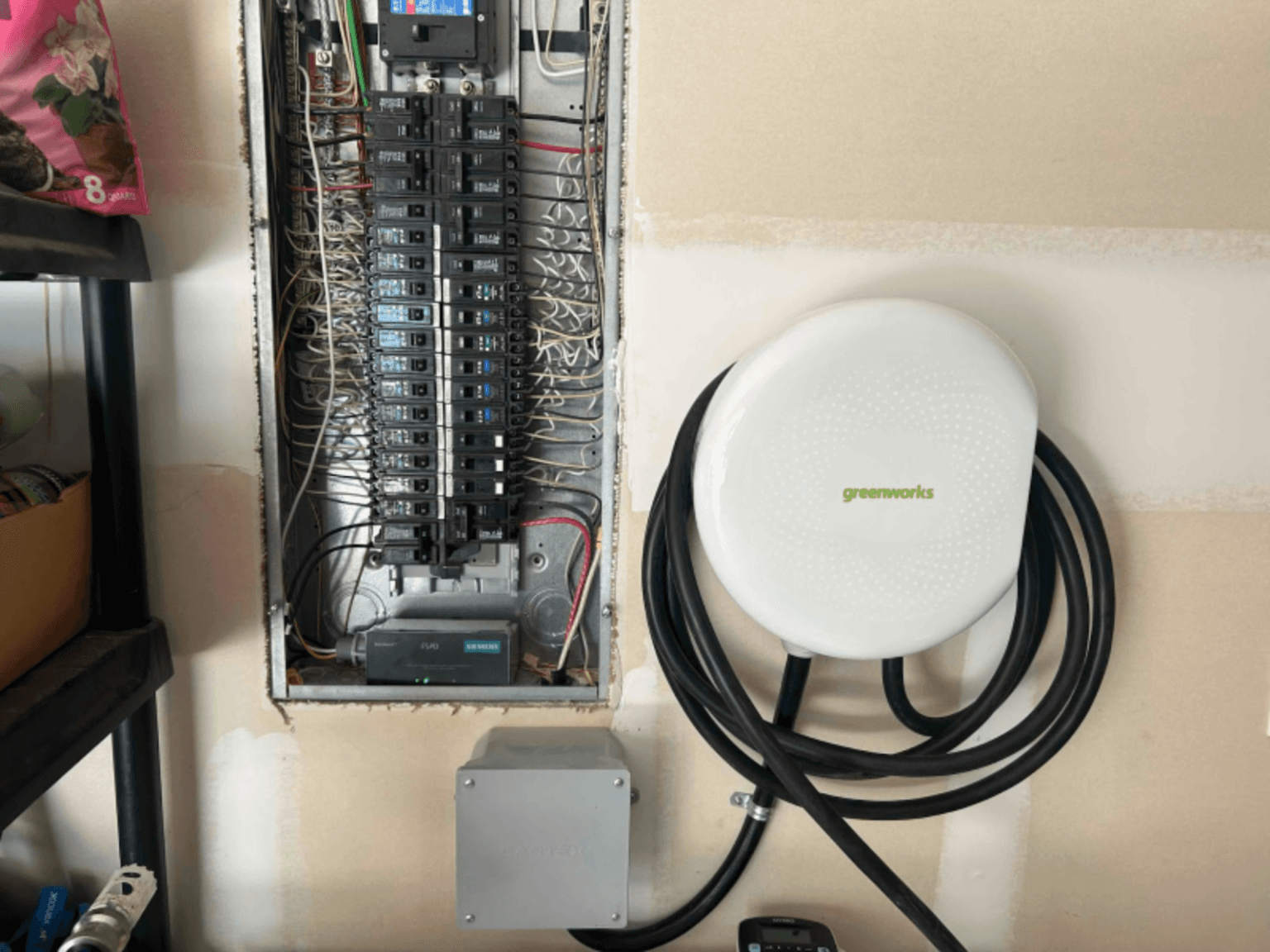
Most home EV charger problems are planning problems. The charger may be fine, but the panel may be crowded, the service may need a load calculation, or the wiring path may not fit the location the homeowner had in mind.
NEC Article 625 covers EV charging equipment. The homeowner version is that the charger, wire, breaker, disconnect needs, and mounting location have to work together as one system.
Because EV charging is a continuous load, the circuit is commonly sized at 125 percent of the charger output. In plain terms, a charger set to draw 40 amps usually needs a 50-amp circuit, subject to the charger instructions and local inspection requirements.
- Decide where the vehicle parks most often before choosing the charger location.
- Have the panel checked for capacity, breaker space, grounding, and signs of heat or damage.
- Choose charger amperage based on your actual driving needs, not just the highest setting available.
- Plan exterior chargers around weather exposure, cable reach, and safe mounting height.
- Keep permit, inspection, and installed-work records with your Lifetime Craftsmanship Warranty details.
Some Rock Hill homes can add a charger with a clean new dedicated circuit. Others need panel work first. If the panel is full, older, warm at breakers, or already feeding large loads, we may recommend a load calculation, repair, or electrical panel upgrade before the charger is installed.
Rock Hill homeowners can review local service details on our Rock Hill electrician page. If you are still comparing services, our electrical services page gives the broader view of panels, circuits, surge protection, and EV charging work.
Planning a home EV charger in Rock Hill?
Tell us what vehicle you drive, where you park, and what panel you have. We will check the electrical capacity before recommending the charger circuit.